.png)
.png)

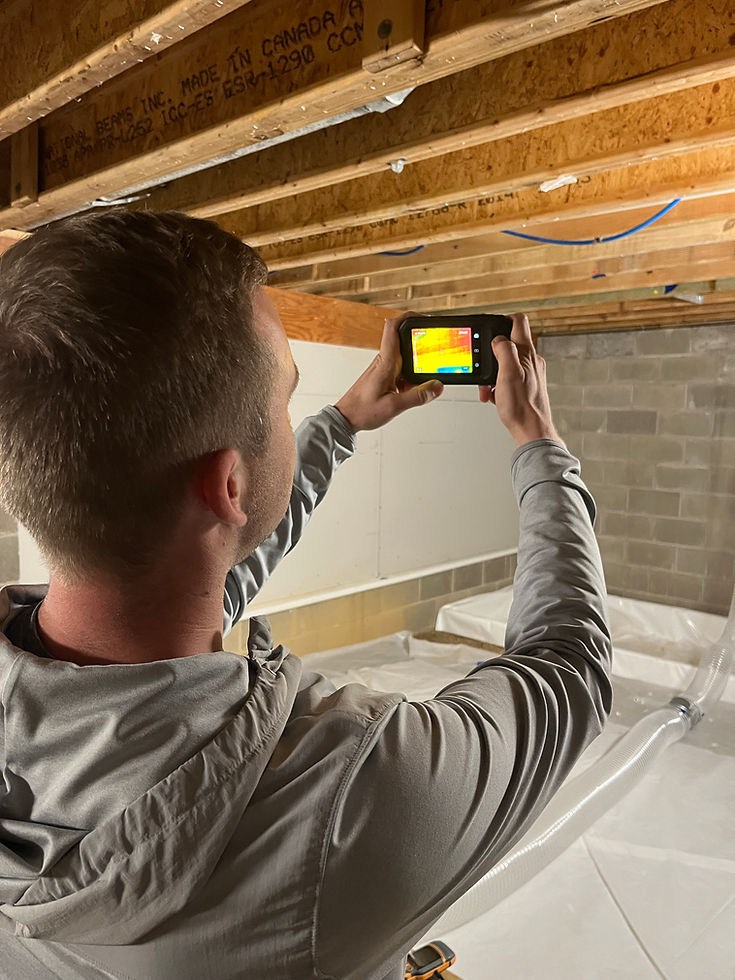
How Thermal Imaging Helps Detect Hidden Moisture After Water Damage
When most homeowners think of water damage, they picture standing water, soaked carpet, or visible stains on walls and ceilings. However, some of the most serious water damage is completely hidden from view.
That’s where thermal imaging technology comes in.
At Fox Valley Restoration, thermal imaging cameras help us identify areas that may be affected by moisture without unnecessarily opening walls, removing flooring, or causing additional disruption to your home.
What Is Thermal Imaging?
A thermal imaging camera detects surface temperature differences and displays them as a color image.
Contrary to popular belief, thermal cameras do not actually “see” water.
Instead, they identify temperature variations that may indicate moisture is present.
When water evaporates, it often creates a cooling effect on nearby materials. Thermal cameras can detect these temperature differences and help technicians locate areas that require further investigation.
Why Hidden Moisture Is a Problem
Water doesn’t always stay where it starts.
After a pipe leak, appliance failure, roof leak, or basement flood, moisture can migrate into:
Drywall
Insulation
Subfloors
Ceiling cavities
Wall framing
Carpet and pad
The visible water may be gone, but moisture can remain trapped inside building materials for days or even weeks.
If hidden moisture is not identified and properly dried, it can lead to:
Material deterioration
Unpleasant odors
Warped flooring
Damaged drywall
Mold growth
Finding hidden moisture early is one of the most important parts of a successful restoration project.
How Thermal Imaging Helps During Water Damage Inspections
Thermal imaging allows restoration professionals to quickly scan large areas and identify locations that may require additional testing.
Common applications include:
Identifying Moisture Behind Walls
A wall may appear completely normal from the outside while moisture remains trapped inside.
Thermal imaging can reveal temperature anomalies that suggest moisture may be present behind the drywall.
Locating Water Migration Paths
Water rarely travels in a straight line.
After a leak or flood, moisture can spread through walls, flooring systems, and structural components.
Thermal imaging helps technicians understand how far moisture has traveled so drying efforts can be focused where they are needed most.
Monitoring Drying Progress
Thermal imaging is also useful during the drying process.
As materials dry, temperature patterns often become more consistent.
This allows technicians to compare readings throughout the project and identify areas that may require additional drying.
Thermal Imaging Is Only Part of the Process
While thermal cameras are valuable tools, they should not be used alone to determine whether materials are wet.
Professional restoration companies use thermal imaging together with moisture meters and other diagnostic equipment.
A thermal image may indicate an area that requires further investigation, but moisture measurements help confirm whether materials are actually affected.
Using multiple tools provides the most accurate assessment of water damage.
Common Situations Where Thermal Imaging Is Helpful
Thermal imaging is frequently used after:
Basement flooding
Pipe leaks
Appliance failures
Roof leaks
Ice dam damage
Overflowing sinks or tubs
Water heater failures
In many cases, it allows technicians to identify affected areas before visible signs of damage appear.
Why Early Detection Matters
The sooner hidden moisture is discovered, the easier it is to address.
Early detection can help:
Reduce repair costs
Prevent additional material damage
Improve drying efficiency
Minimize the risk of mold growth
Speed up restoration timelines
Many homeowners are surprised to learn how much moisture can remain hidden after a water loss.
Professional Moisture Detection in Appleton and the Fox Valley
At Fox Valley Restoration, we use thermal imaging technology and professional moisture detection equipment to help identify hidden moisture after water damage events.
Whether you’re dealing with a basement flood, plumbing leak, or suspected water intrusion, proper inspection is critical to ensuring affected materials are thoroughly evaluated and dried.
If you suspect hidden moisture in your home, contact Fox Valley Restoration for a professional assessment in Appleton, Neenah, Menasha, Oshkosh, and surrounding Fox Valley communities.


Comments